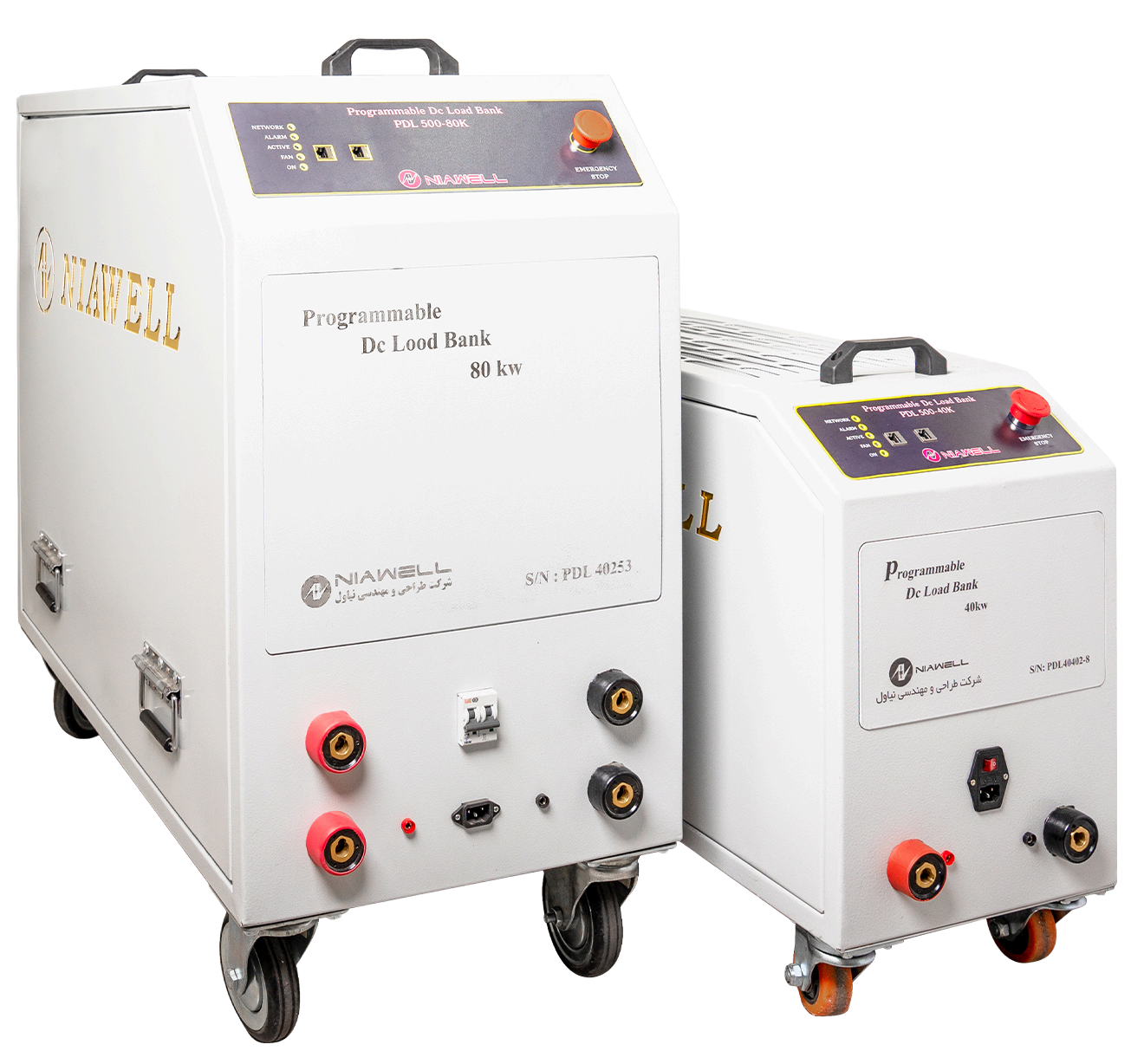
The PDL series DC loadbank is an advanced tool for testing, discharging, and evaluating the performance of various industrial batteries. This device, capable of operating in three operating modes CC (constant current), CP (constant power) and CR (constant resistance) and with a wide voltage range from 10 to 500 volts, is ideal for testing nickel-cadmium (Ni-Cd), lead-acid and lithium batteries. The compact design and high power density make it easy to use in space-constrained environments. Precise current control with accuracy of less than 0.5 A ensures a stable and reliable discharge. The Central Supervision Unit (CSU) monitoring and control module enables remote monitoring and system management. Test results can be viewed, saved and edited on a personal computer via the Niawell CSU Logger software provided with the device. In addition, comprehensive data logging, real-time charts and generation of PDF reports enable precise and professional analysis of battery performance. The simple user interface, quick setup and stable operation make the PDL a smart choice for industrial testing centers.</br></br>
English
DC Loadbank
Features
Wide input voltage range (500 ~ 10)
High power in a small volume
Precise constant current control with accuracy less than 0.5 A
Separate monitor and control section from the device
Ability to test batteries under real load
Real-time reporting and plotting during the test
Ability to test various batteries (Nickel-Cadmium - Lead-Acid - Lithium)
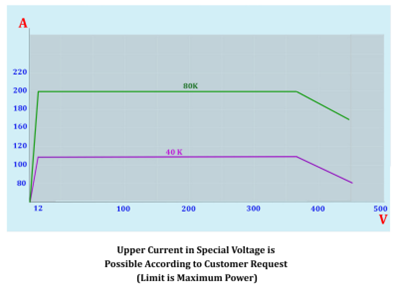
Dynamic discharge technology - maximum current at all voltages
Support for parallel operation to increase power capacity
Applications
Industrial battery and high voltage testing centers
Power plants
Telecommunications industries
Rail and metro systems
Oil and gas industry
Military and aerospace industries
Data centers
The PDL series DC loadbank is an advanced tool for testing, discharging, and evaluating the performance of various industrial batteries. This device, capable of operating in three operating modes CC (constant current), CP (constant power) and CR (constant resistance) and with a wide voltage range from 10 to 500 volts, is ideal for testing nickel-cadmium (Ni-Cd), lead-acid and lithium batteries. The compact design and high power density make it easy to use in space-constrained environments. Precise current control with accuracy of less than 0.5 A ensures a stable and reliable discharge. The Central Supervision Unit (CSU) monitoring and control module enables remote monitoring and system management. Test results can be viewed, saved and edited on a personal computer via the Niawell CSU Logger software provided with the device. In addition, comprehensive data logging, real-time charts and generation of PDF reports enable precise and professional analysis of battery performance. The simple user interface, quick setup and stable operation make the PDL a smart choice for industrial testing centers.
Graphing – Centralized control remotely via network cable
Test Storage
Stores last 12 tests for review with PDF export
Items
Specification
PDL-500-40K
PDL 500-80K
Accessories
CSU - Power Cable with connectors - Auxiliary power supply - Network cable - Cable for log - Case for auxiliarys parts - Cover
Chart
Practical Example
In a test scenario, the PDL device is connected to the battery and the warning thresholds for current and voltage are preset. After the discharge process begins, the device maintains the current at the set value in constant-current mode (CC). As the voltage gradually decreases and reaches the warning level (a value slightly above the cut-off voltage), the device triggers an alarm. If the voltage continues to drop and reaches a critical level that risks deep discharge of the battery, the PDL automatically stops the discharge process to prevent damage to the battery.</br>In case of a temporary power interruption, the device resumes the test process from the same point after power is restored. All recorded data are stored in the device memory and can be easily transferred to a computer via the Niawell CSU Logger software and viewed and managed as PDF.
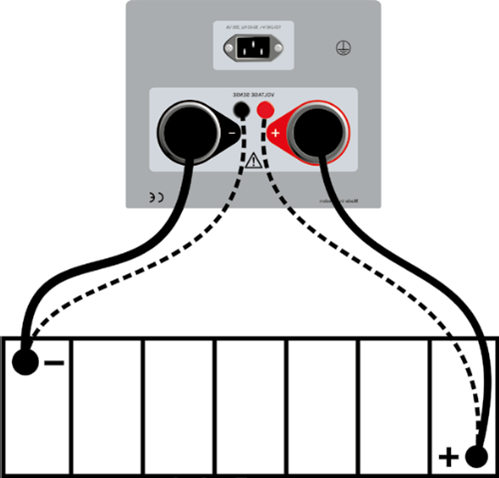
For accurate measurement of battery voltage, especially in applications with long cables or high currents, it is recommended to use separate sense lines (sense lines) to compensate for voltage drop.

 فارسی
فارسی English
 العربية