



How to select and coordinate SPDs, account for connection length and protect power, control and communication equipment.
1. What is a transient surge?
A transient surge is a short-duration overvoltage caused by lightning effects, switching operations or changes in inductive circuits. Although brief, its energy can damage insulation, electronics and control systems.
2. Type 1, Type 2 and Type 3
SPD types refer to different installation locations and surge duties. Type 1 is commonly associated with high-energy current at the service entrance, Type 2 with distribution protection and Type 3 with protection close to sensitive equipment, subject to the applicable standard and design.
3. Installed protection level matters
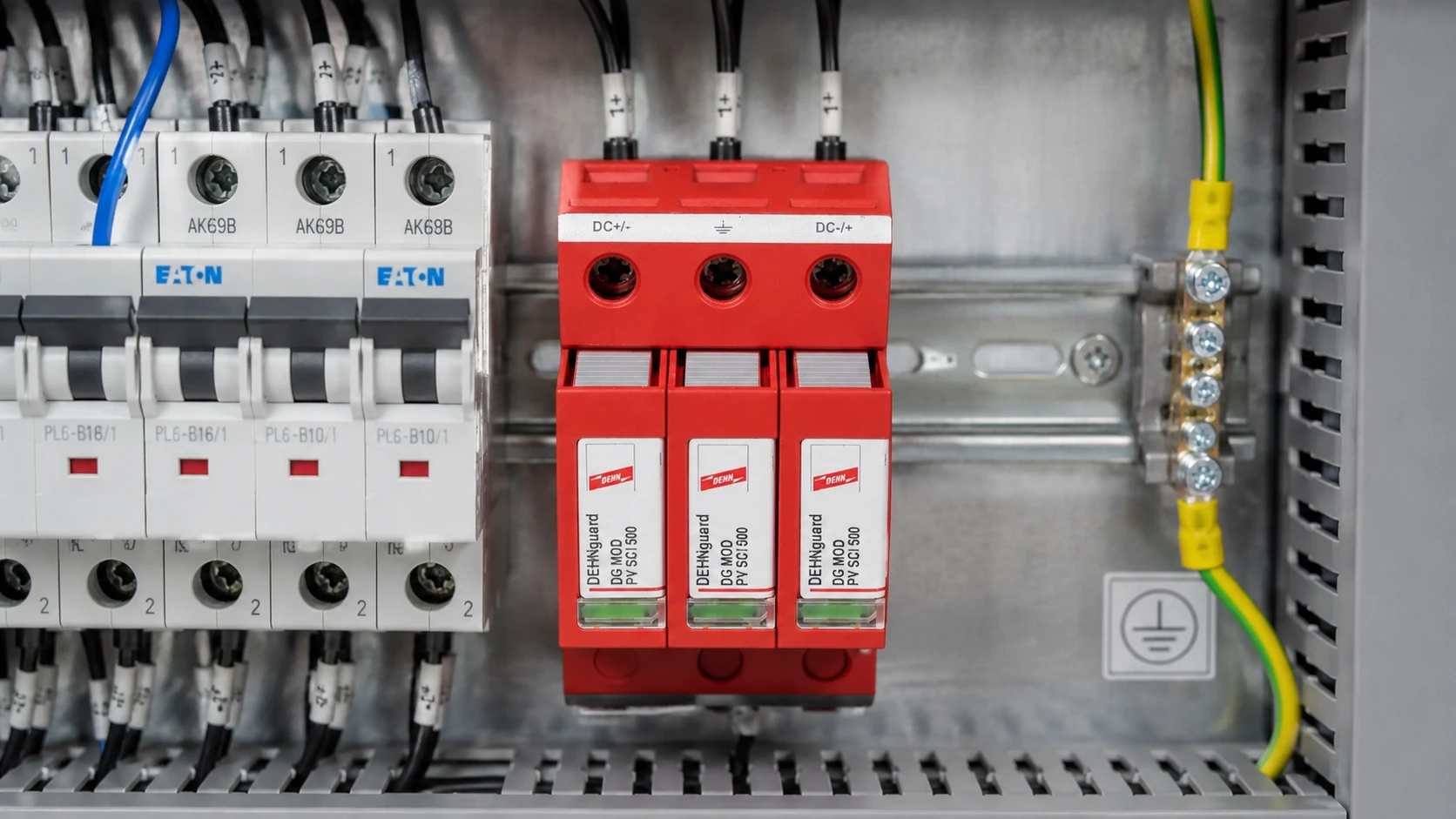
The data-sheet Up value is not the whole story. Lead length and installation inductance add voltage during a surge, so the effective protection at the equipment can be worse than the catalog value if wiring is long or poorly routed.
4. Backup protection
An SPD may require a specified upstream fuse or breaker. Backup protection must follow the manufacturer coordination data so the SPD can disconnect safely if it reaches end of life or develops a fault.
5. Earthing system and network topology
SPD selection and connection depend on TN, TT or IT earthing arrangements and on whether the circuit is phase-to-neutral, phase-to-earth or another topology. The wiring diagram for the exact network must be followed.
6. DC, signal and data lines
Power-line SPDs cannot automatically protect signal, Ethernet or instrument loops. Each interface needs a device compatible with its voltage, signal type, bandwidth, grounding concept and required surge category.
7. Inspection and status monitoring
Periodic inspection should check status indicators, remote contacts, backup fuses, signs of heating, loose connections and changes in the panel. A failed SPD should not remain unnoticed until the next major shutdown.
8. Specification checklist
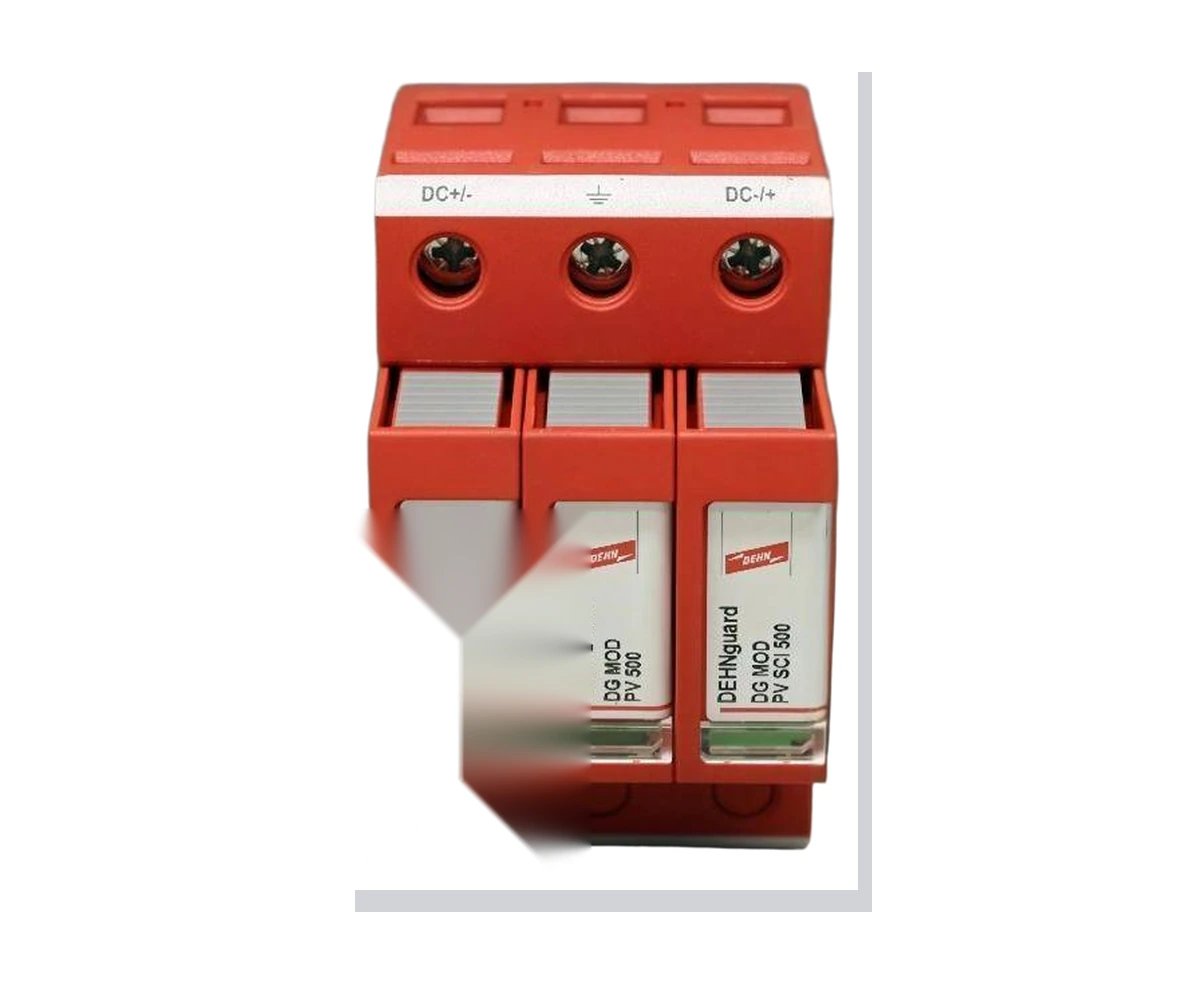
Specify network voltage and earthing, SPD type, Uc, Up, surge-current parameters, backup protection, remote contact, installation location and reference standard. A phrase such as “three-phase 40 kA arrester” is not enough for engineering selection.
9. Why connection length matters
Fast surge current creates voltage across conductor inductance. Keeping the total path from bus to SPD and PE short, direct and low-loop-area is therefore a practical part of surge-protection design.
10. Zone-based protection
Effective surge protection is usually staged from the service entrance through distribution panels to sensitive equipment. Power, control and communication paths should be considered together so a surge cannot bypass the protected power path through another cable.
11. Commissioning and monitoring
After installation, verify the model, wiring, lead length, PE connection, terminal torque, backup protection, indicator and remote alarm path. If the contact is connected to PLC or BMS, test the complete alarm chain to the HMI.
12. Common specification and installation mistakes
Common mistakes include selecting by kA alone, using the wrong Uc, ignoring earthing topology, long connection leads, incorrect backup fuse and treating the SPD as a substitute for bonding, grounding or EMC design.
13. Handover documents and final checklist
Handover documents should show the installed SPD, wiring arrangement, backup device, PE point, conductor size, remote alarm logic and the manufacturer data sheet. Operators also need the inspection and module-replacement procedure.
Sources and references
This article is original editorial content informed by the references below. Final project requirements must be checked against the applicable standards and manufacturer data.