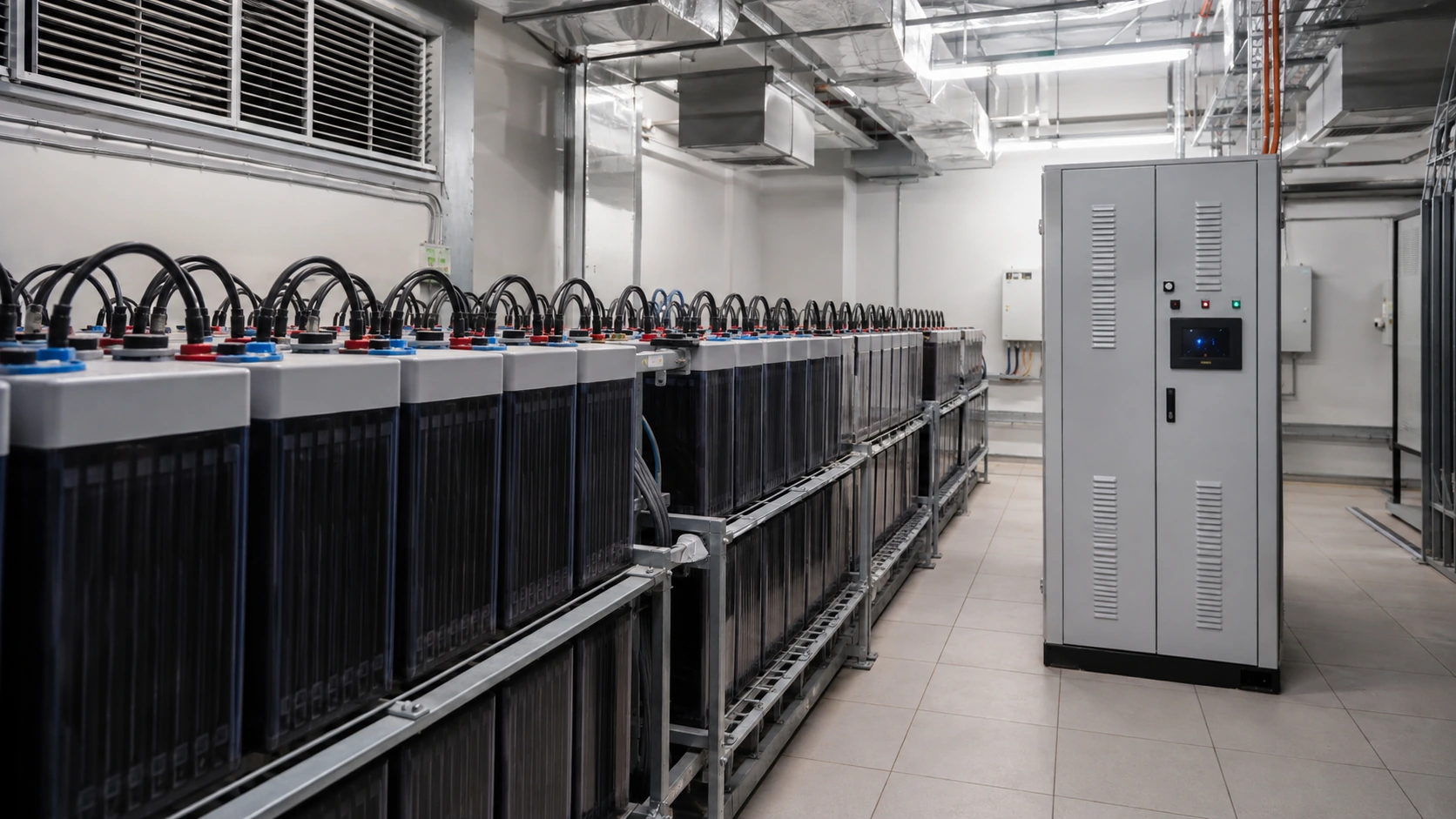



From KOH electrolyte and cell voltage behavior to inspection, safety, charging, capacity testing and electrolyte decisions.
1. Why Ni-Cd behaves differently
Nickel-cadmium cells use an alkaline electrolyte and have different charging, maintenance and aging behavior from lead-acid batteries. Maintenance procedures must therefore follow the battery manufacturer rather than borrowing lead-acid practices.
2. Alkaline electrolyte safety
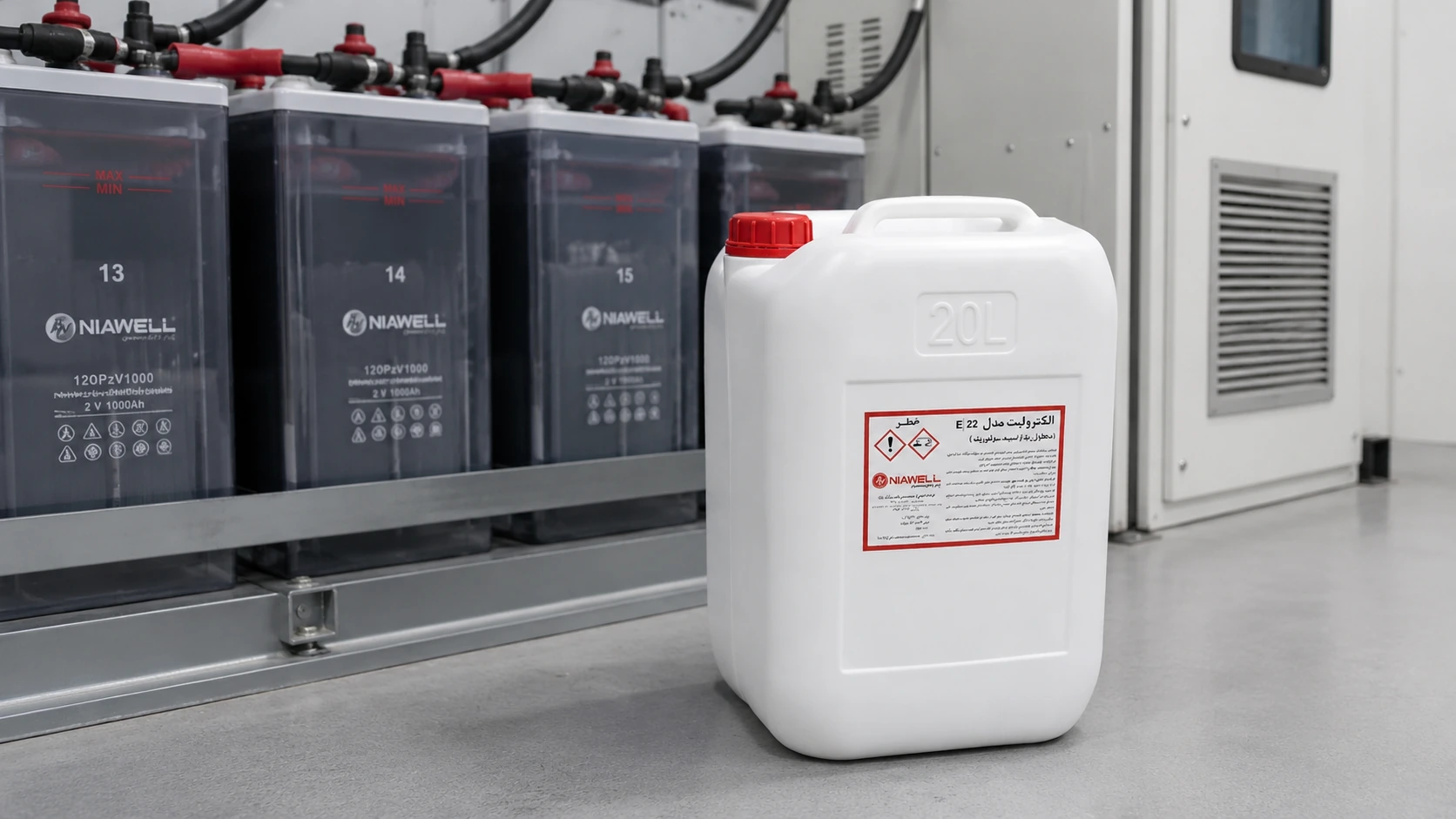
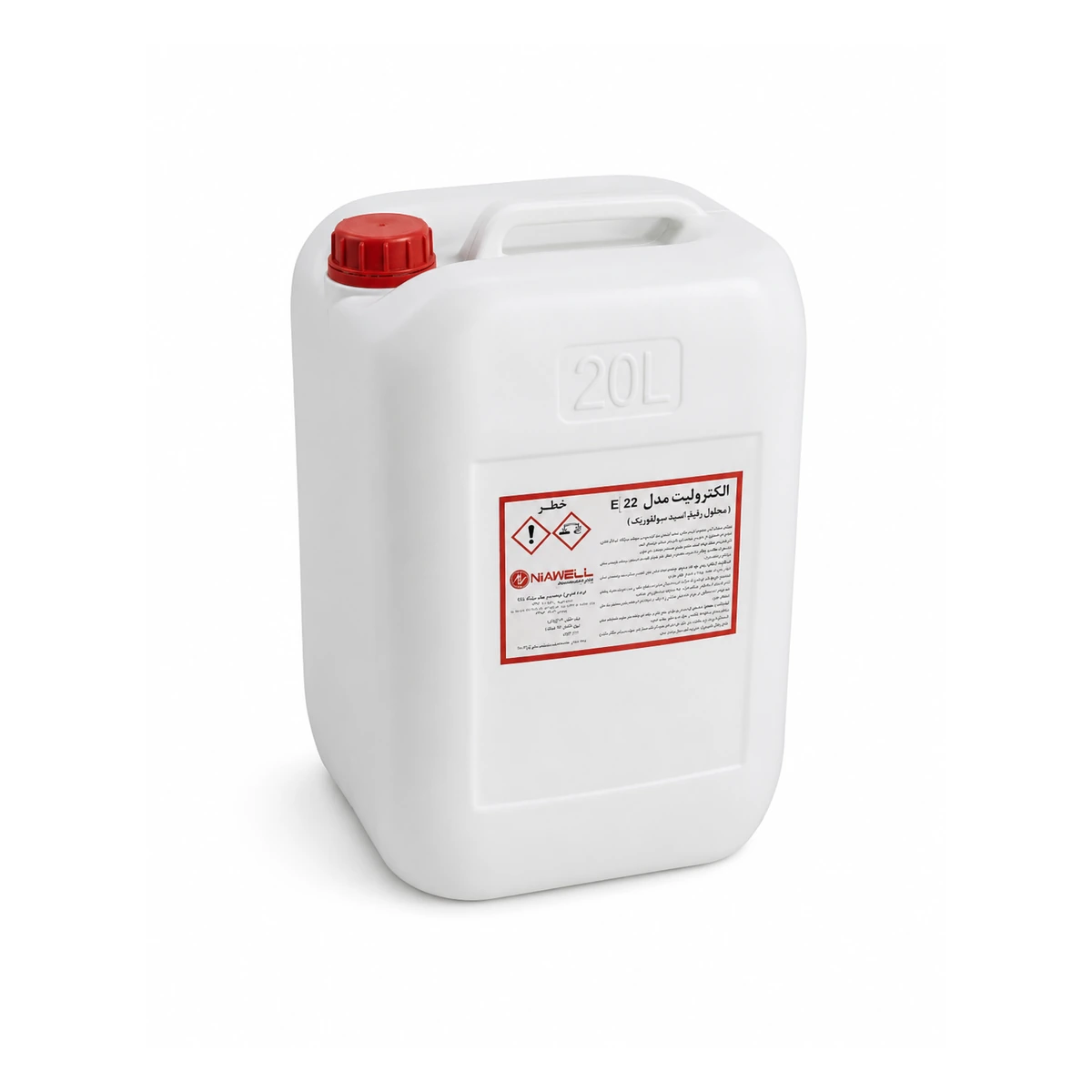
Ni-Cd electrolyte is caustic. Work requires suitable eye, face, hand and body protection, good ventilation, controlled handling and access to the safety data sheet and site emergency procedure.
3. Electrolyte level: water or electrolyte?
During normal service the electrolyte level mainly changes because water is lost. Top-up decisions should follow manufacturer limits; adding electrolyte instead of the specified water can change concentration and damage performance.
4. Carbonation and contamination
Carbon dioxide from air can react with alkaline electrolyte and increase carbonate content over time. Excessive contamination can affect performance, so ventilation, cleanliness and manufacturer maintenance limits matter.
5. Float, boost and temperature
Float and boost settings should be based on the cell type, number of cells and temperature guidance from the manufacturer. Chronic overcharge wastes water and raises temperature; undercharge can leave the bank below the required state of charge.
6. Capacity testing
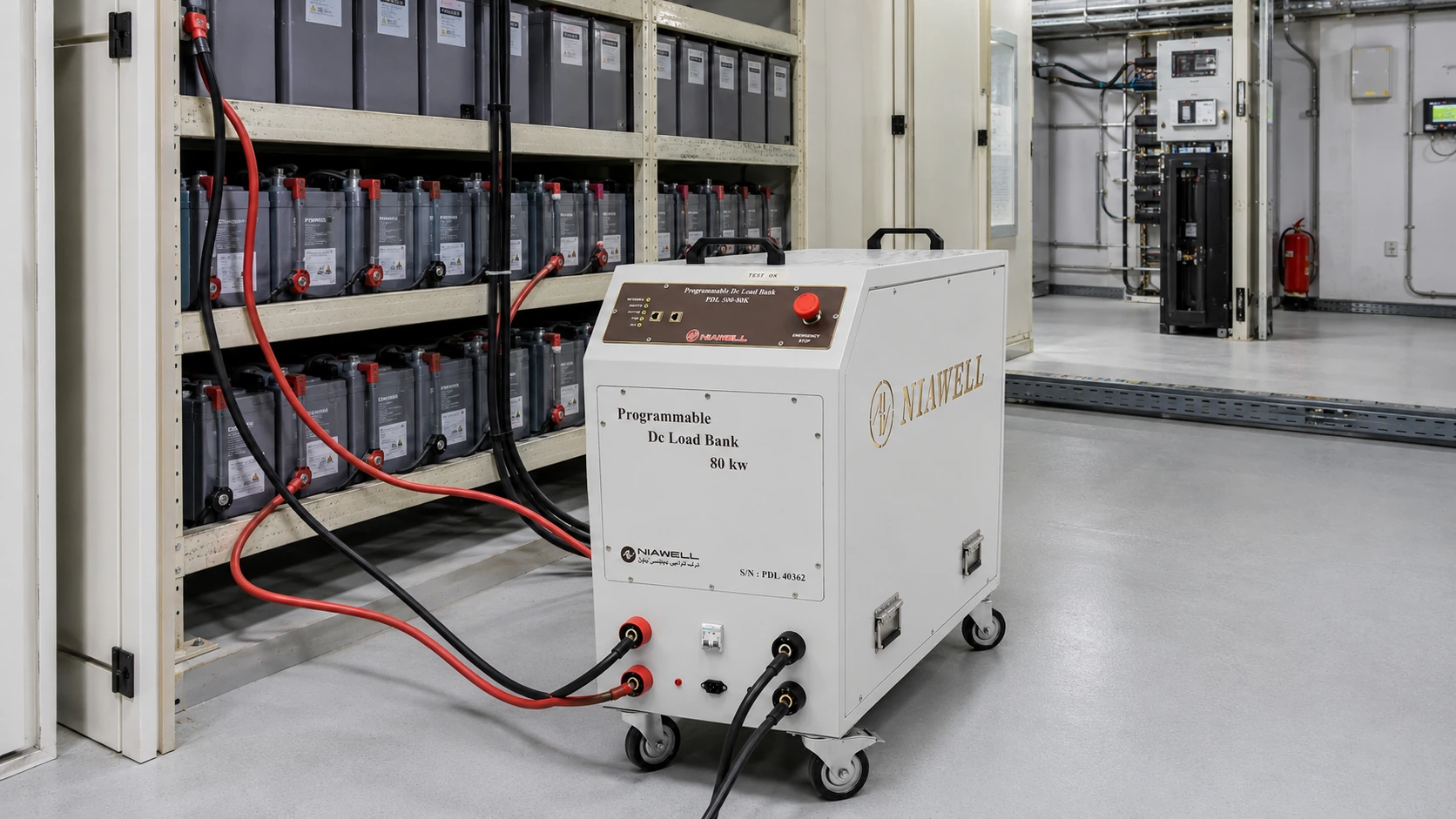
A capacity test discharges the bank at a defined current or power to a defined end voltage while time, total voltage, cell voltages and temperature are monitored. The result is meaningful only when the test conditions are documented.
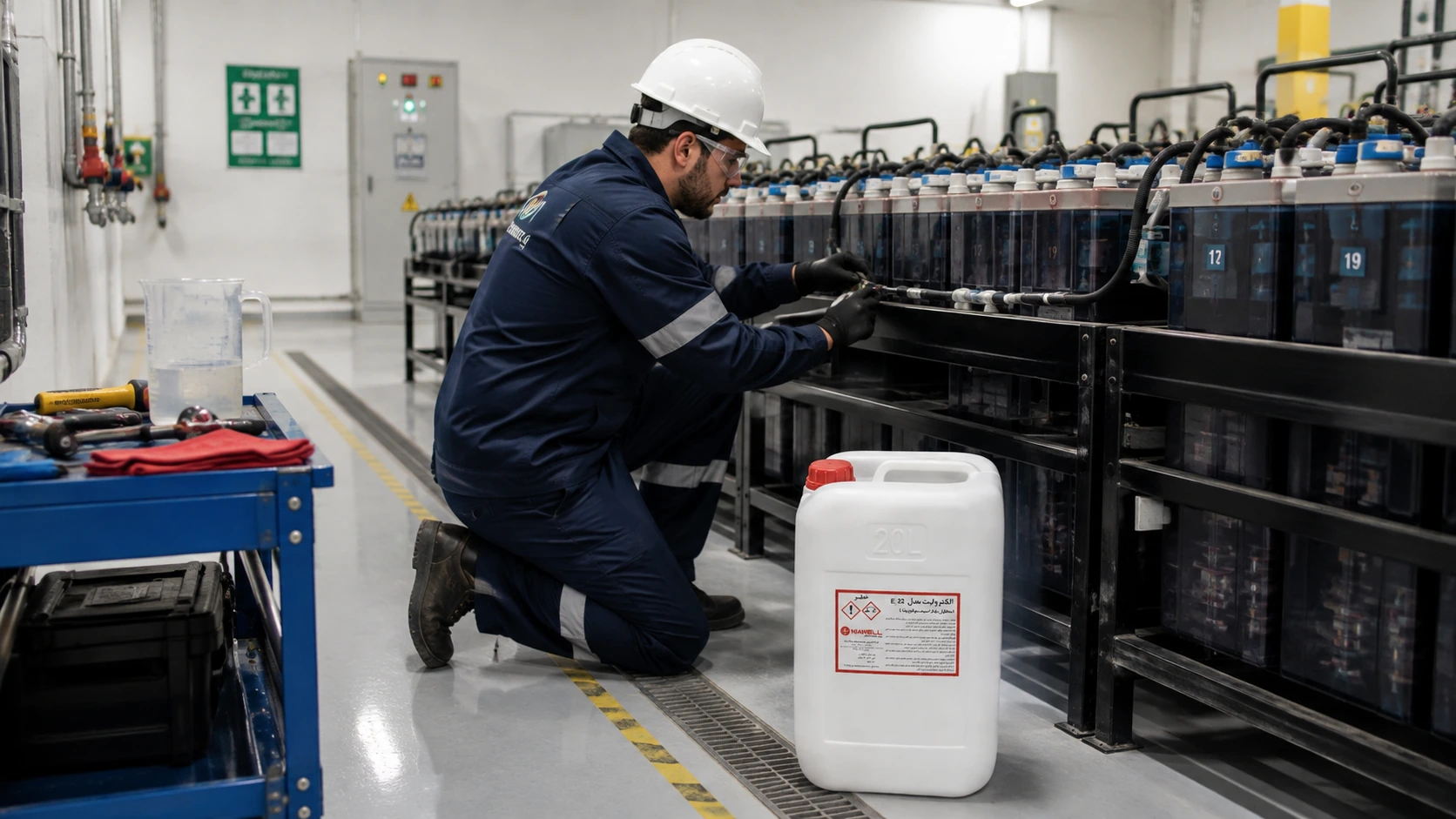
7. A practical maintenance routine
A practical inspection records cell voltage, electrolyte level, terminal condition, corrosion, cleanliness, temperature, charger status and alarms. Repeating the same measurements makes trends more valuable than isolated readings.
8. Procurement and service data
For replacement parts or electrolyte service, provide battery manufacturer, model, cell type, quantity, nominal voltage, installation date, charger settings and the exact maintenance issue. This prevents incompatible material or incorrect service procedures.
9. Trending data for condition-based maintenance
Trend cell voltage, temperature, water addition, charge current and capacity-test results. A slow change across several maintenance visits often reveals deterioration earlier than a single pass/fail inspection.
10. Storage, installation and commissioning
Storage time, temperature and state of charge affect commissioning work. Before service, inspect for transport damage, verify polarity and connections, apply the manufacturer charging procedure and record baseline measurements.
11. Troubleshooting reduced capacity
Reduced capacity can come from charging problems, weak cells, high resistance connections, temperature, long storage or aging. Diagnosis should combine charger checks, visual inspection, cell measurements and a controlled capacity test.
12. What a useful maintenance record contains
A useful record includes battery identity, date, technician, ambient and cell temperatures, charger voltage and current, individual cell readings, electrolyte actions, defects found and corrective work. Consistent records make later troubleshooting faster.
Sources and references
This article is original editorial content informed by the references below. Final project requirements must be checked against the applicable standards and manufacturer data.